Korean Drinking Culture: What Foreigners Should Know
Understanding a few simple customs can help you feel more comfortable and connected at a Korean drinking gathering.
Korean Drinking Culture: What Foreigners Should Know
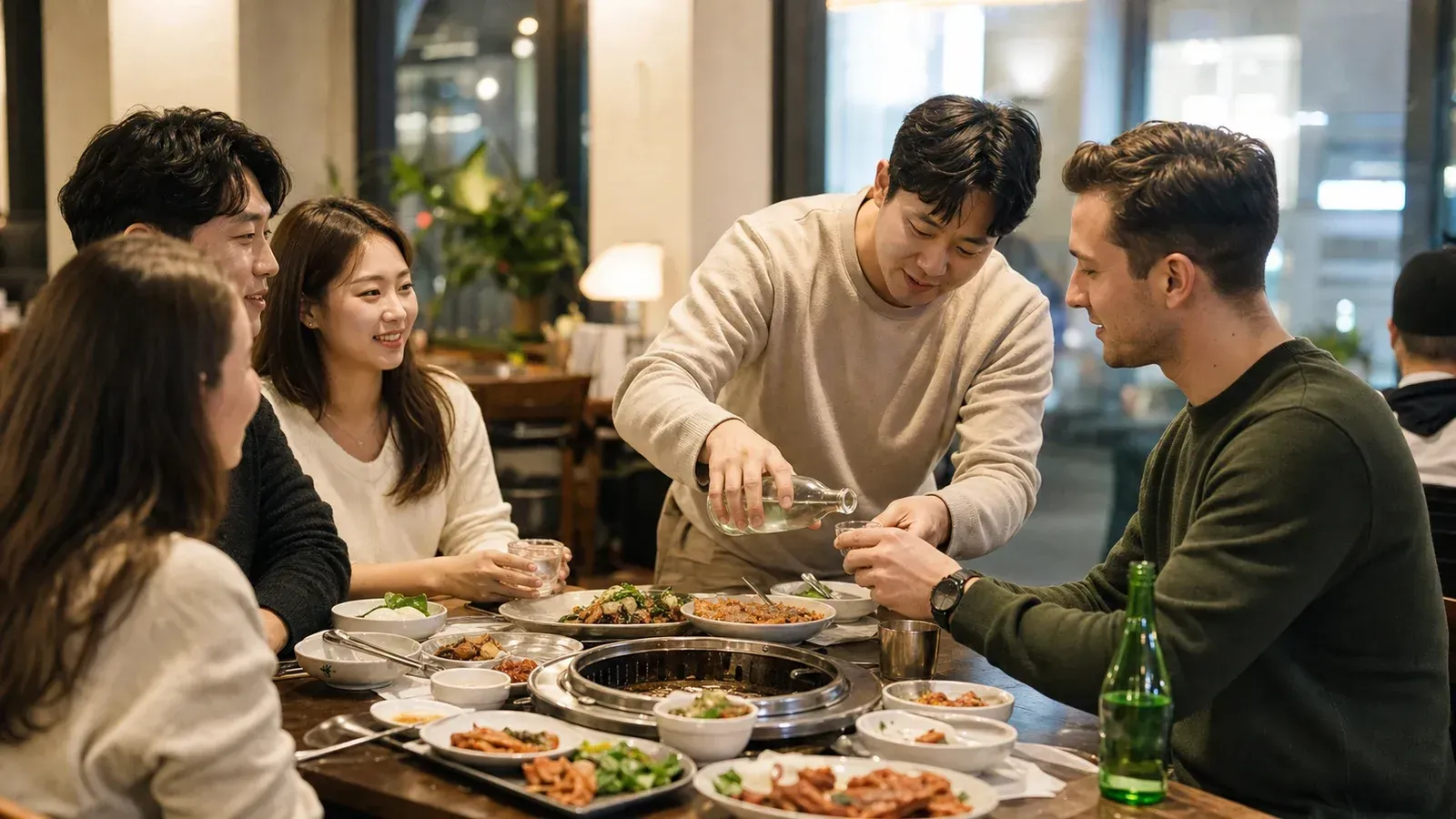
Korean drinking culture can look formal from the outside. You may see someone pour a drink with two hands, turn away before taking a sip, or continue the evening at another place.
These customs are not a test for visitors. They are ways of showing attention to the people around the table, and they change depending on age, friendship, and the occasion.
Why People Pour Drinks for Each Other
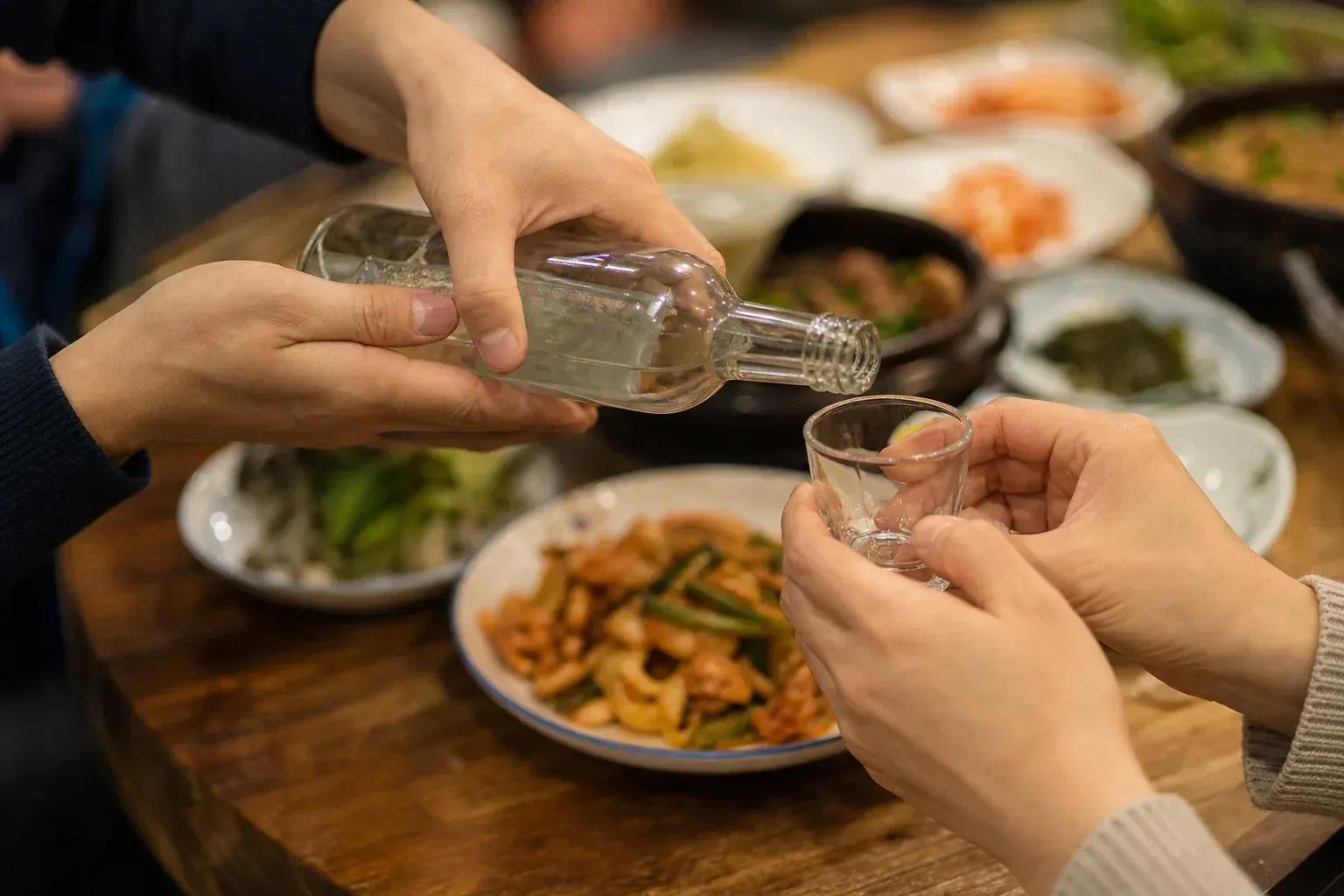
At many Korean gatherings, people fill one another’s glasses before their own. In a formal setting, holding the bottle with your right hand while lightly supporting your wrist with the left can show respect.
When receiving a drink, using both hands communicates the same idea. Among close friends, however, people may use one hand or pour for themselves. If you are unsure, watch the group and follow its tone.
Why Someone May Turn Away to Drink
A younger person may turn their head slightly away from an older or senior person before drinking. This custom comes from traditional ideas of modesty in hierarchical relationships.
You are more likely to see it at a formal dinner than during a casual night with friends. Visitors are not expected to perform every gesture perfectly. A respectful attitude matters more.
Geonbae, Anju, and the Next Round
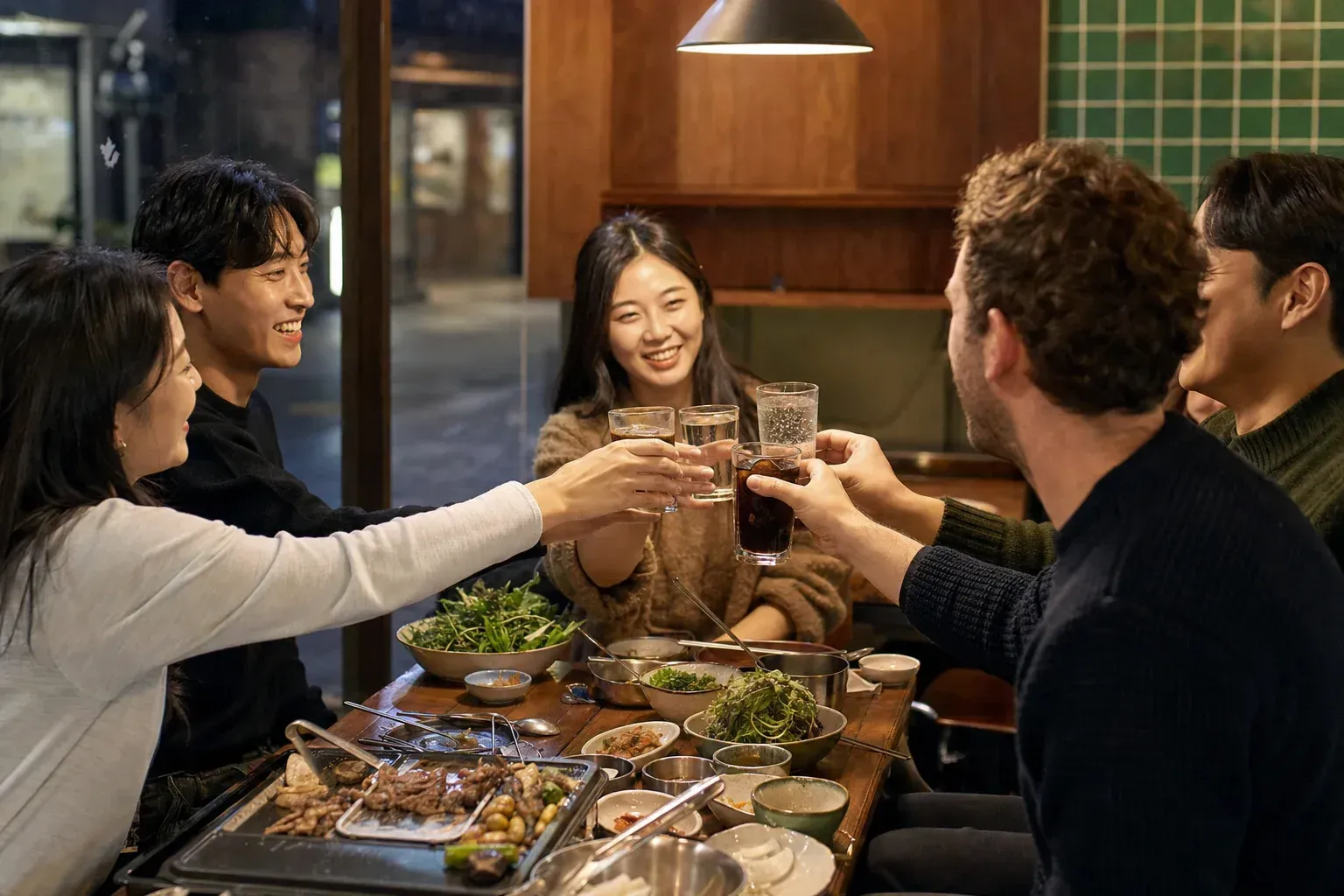
Geonbae means “cheers.” You can raise your glass with the group, but you do not have to empty it every time.
Anju is food served with alcohol. Korean drinking often happens around shared dishes, so an invitation for drinks may also mean a full meal.
You may also hear people call each stop a cha, or round. Dinner can be the first round and karaoke the second, but joining every round is never required.
You Do Not Have to Drink
You can join a toast with water or a soft drink. If you do not want alcohol, say so politely and clearly. You do not owe anyone a detailed explanation.
Likewise, never pressure someone else to drink. Health, religion, medication, recovery, safety, and personal choice matter more than tradition.
The Real Purpose Is Connection
Korean drinking customs are often presented online as strict rules. Their real purpose is much simpler: sharing food, noticing another person, and creating a comfortable social moment.
Observe the group, use two hands when the situation feels formal, and keep your own boundaries. You can take part in the warmth of a Korean gathering without drinking heavily—or drinking at all.