Why Do Some Older Koreans Stare at Foreigners?
A balanced look at curiosity, generational experience, cultural difference—and why your discomfort still matters.
Why Do Some Older Koreans Stare at Foreigners?
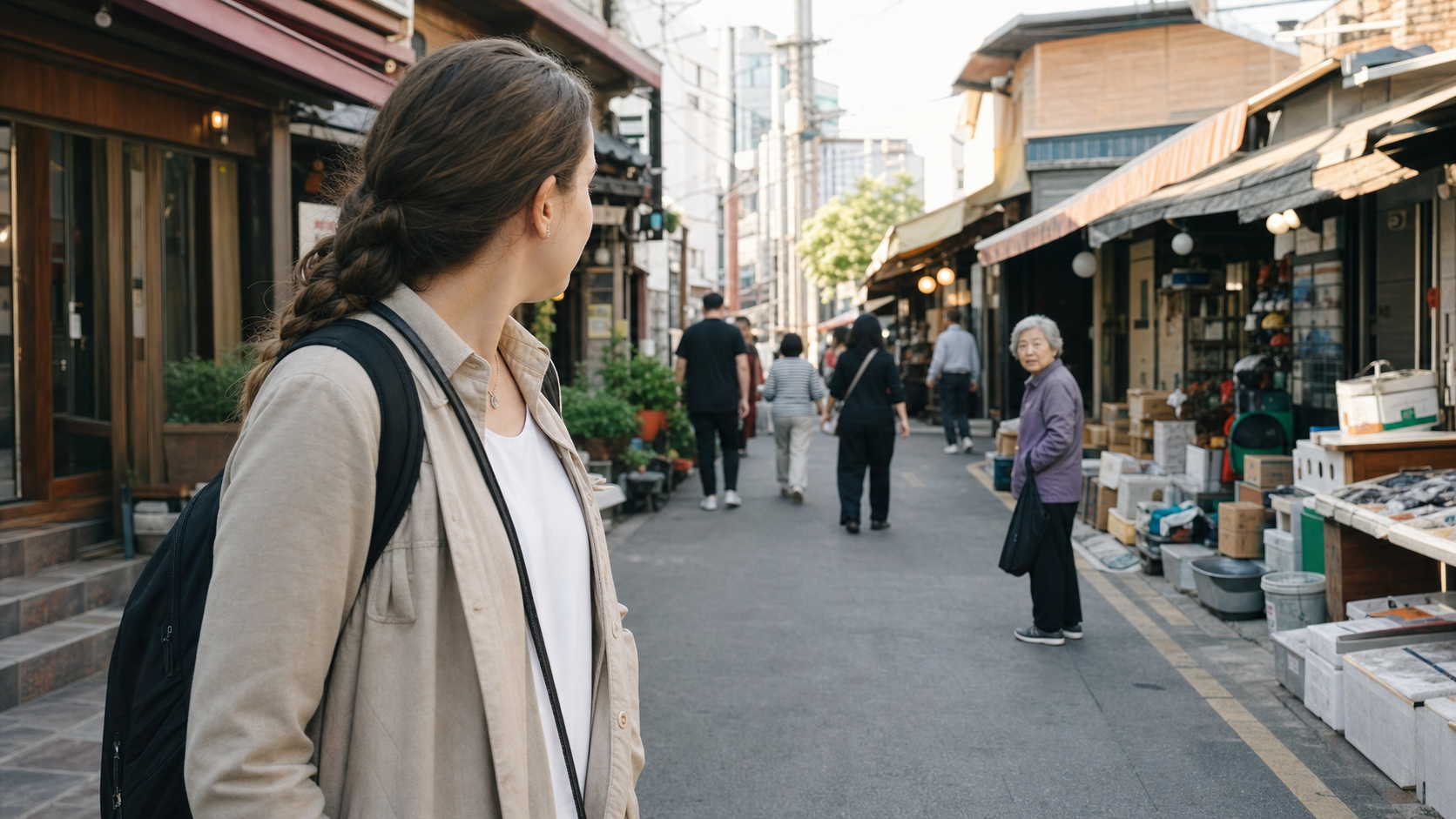
Some visitors to Korea notice an older person looking at them for longer than expected. When you have done nothing unusual, that attention can feel uncomfortable or even discriminatory.
There is no way to know a stranger’s intention from one glance. However, curiosity and unfamiliarity can sometimes help explain the experience.
A stare does not have one universal meaning
Eye contact feels different across cultures and individuals. A look that seems ordinary to one person may feel intrusive to another.
Someone may notice your clothing, language, luggage, tattoos, or appearance. They may be curious but unsure how to begin a conversation. A neutral expression can also look stern when no words are exchanged.
Of course, a stare can sometimes be rude or prejudiced. Cultural context may explain behavior, but it should not be used to dismiss your discomfort.
Why Generation and Location May Matter
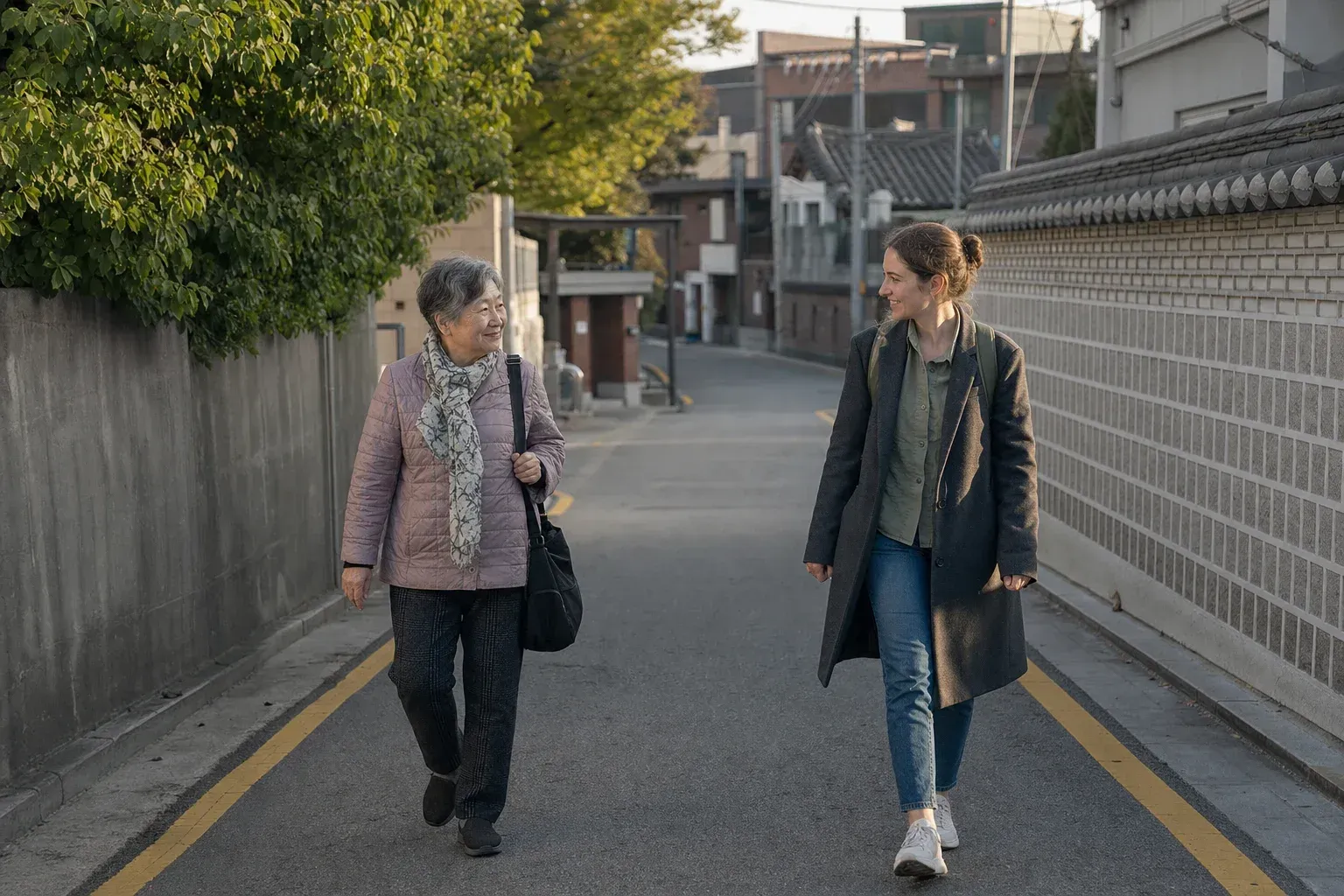
Some older Koreans grew up when international residents and overseas visitors were much less common. For someone with little previous contact with foreigners, visible differences may still attract attention.
Where you are also matters. People in central Seoul may meet international visitors every day, while someone in a smaller town may have fewer such encounters.
This is context, not a rule. Many older Koreans are internationally experienced and pay no special attention to foreign visitors. Younger people can stare too.
Is It Racism?
Not necessarily, but you should not assume that every stare is innocent either.
Curiosity, surprise, attraction, disapproval, and prejudice can look similar from a distance. A brief glance is different from someone following you, insulting you, photographing you without permission, or repeatedly invading your space.
Intention and impact are also different. Someone may not mean to offend you, but their prolonged attention can still make you uncomfortable.
What Should You Do?
If the situation feels harmless, you can ignore it, make brief eye contact, offer a small smile, or move somewhere else. Choose whichever response feels most comfortable.
If someone follows you, threatens you, records you, or prevents you from leaving, move toward staff, other passengers, or a busy public area and ask for help. Cultural understanding never requires you to remain in an unsafe situation.
Leave Room for More Than One Explanation
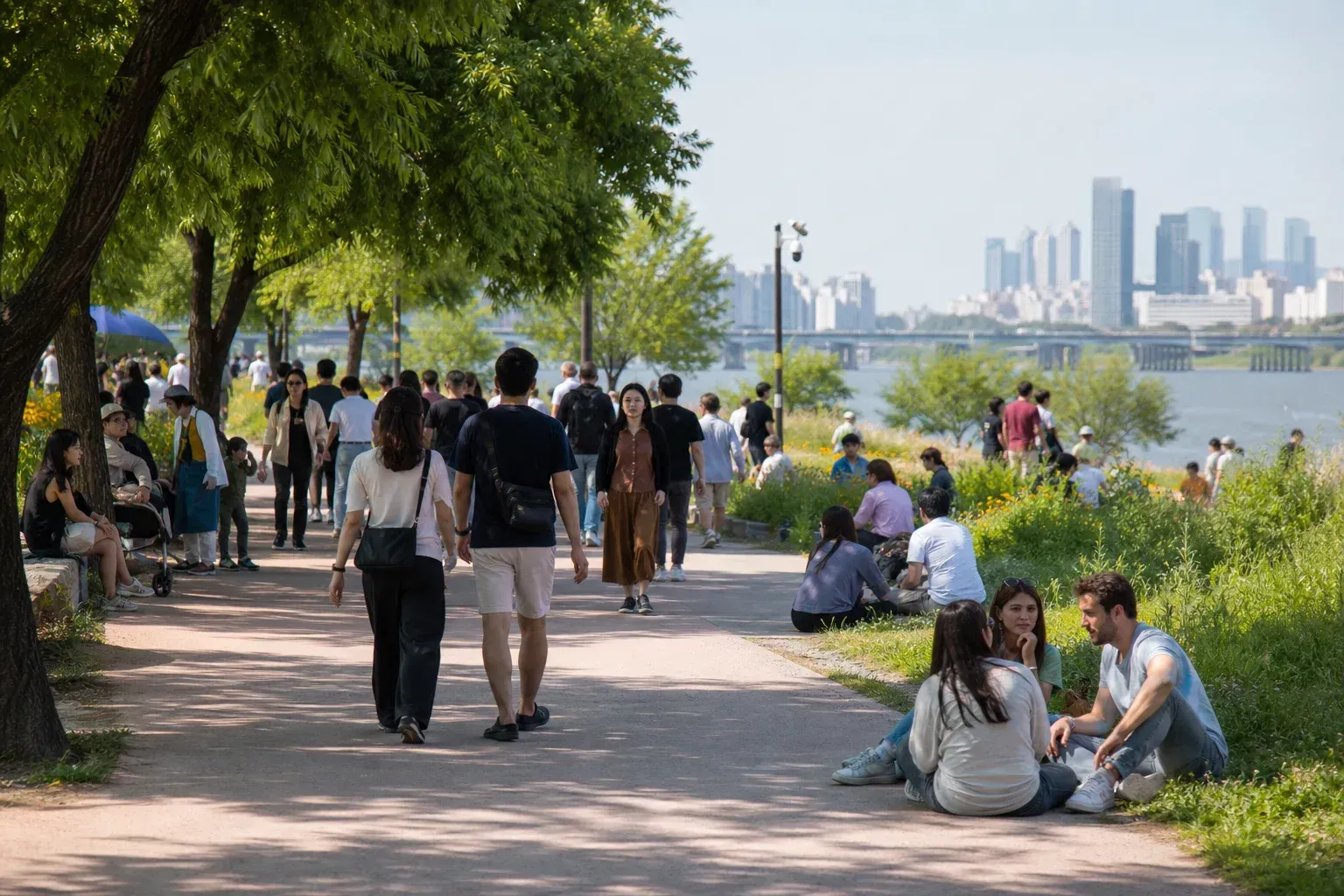
Korea today includes international residents, students, workers, multicultural families, and visitors. Attitudes vary widely, and one awkward encounter does not represent an entire country.
When nothing else feels threatening, curiosity may be a reasonable first interpretation—but it remains an interpretation, not a certainty. Trust your instincts and respond in the way that feels right for you.